Latest from BCA Research

Since our last missive on June 15, three trading days have passed. The S&P 500 is up 0.2%, the US 10-year Treasuries yield has declined by 3 basis points, Brent crude is up 2.7%, gold is down by 2%, the JPY is down 0.7%, and DXY is up 0.7%. Our message prior to the start of these three trading days was that there was some more upside to oil prices in the very near term. However, that this upside would not be that impressive. Second, that the S&P 500 should not be shorted. And that the USD and US Treasuries would not be a great hedge, but that gold and JPY would be.

In this Insight, we look at the best trade idea from the recent rate cut by the Riksbank.
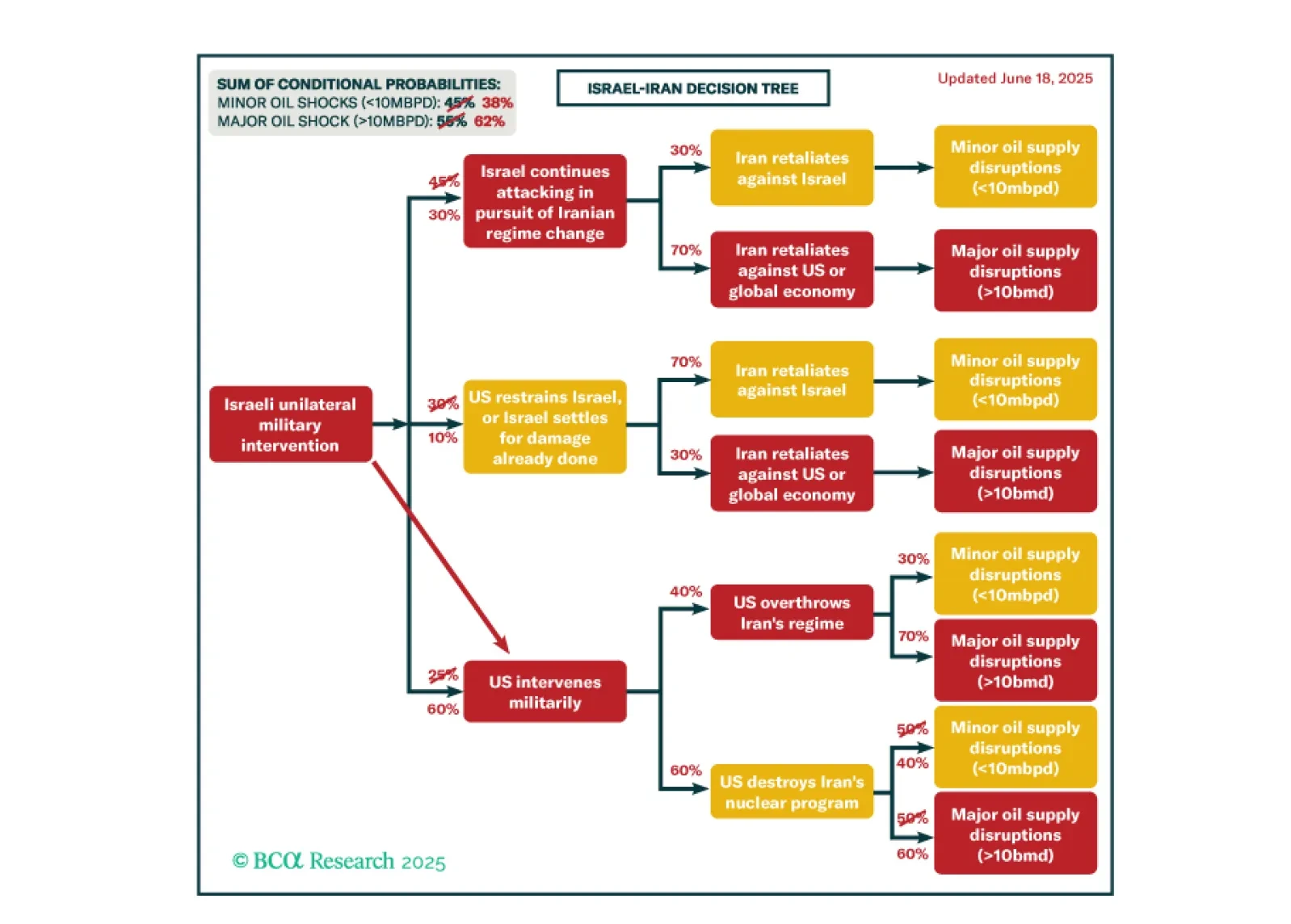
Even if Iran tries to revive talks, the US has an irresistible opportunity to dismantle its nuclear program. Tactically, investors should favor Treasuries over the S&P, defensive sectors over cyclicals, energy stocks over cyclicals, and US stocks over European stocks in the near term.

In this note, we reaffirm our underweight position in JGBs and long yen positions given the BoJ’s meeting overnight.

Israel’s attacks on Iran will continue until Iran is forced to strike regional oil supply to get the US to restrain Israel. That may not work. Investors should prepare for a broader economic impact of the conflict.
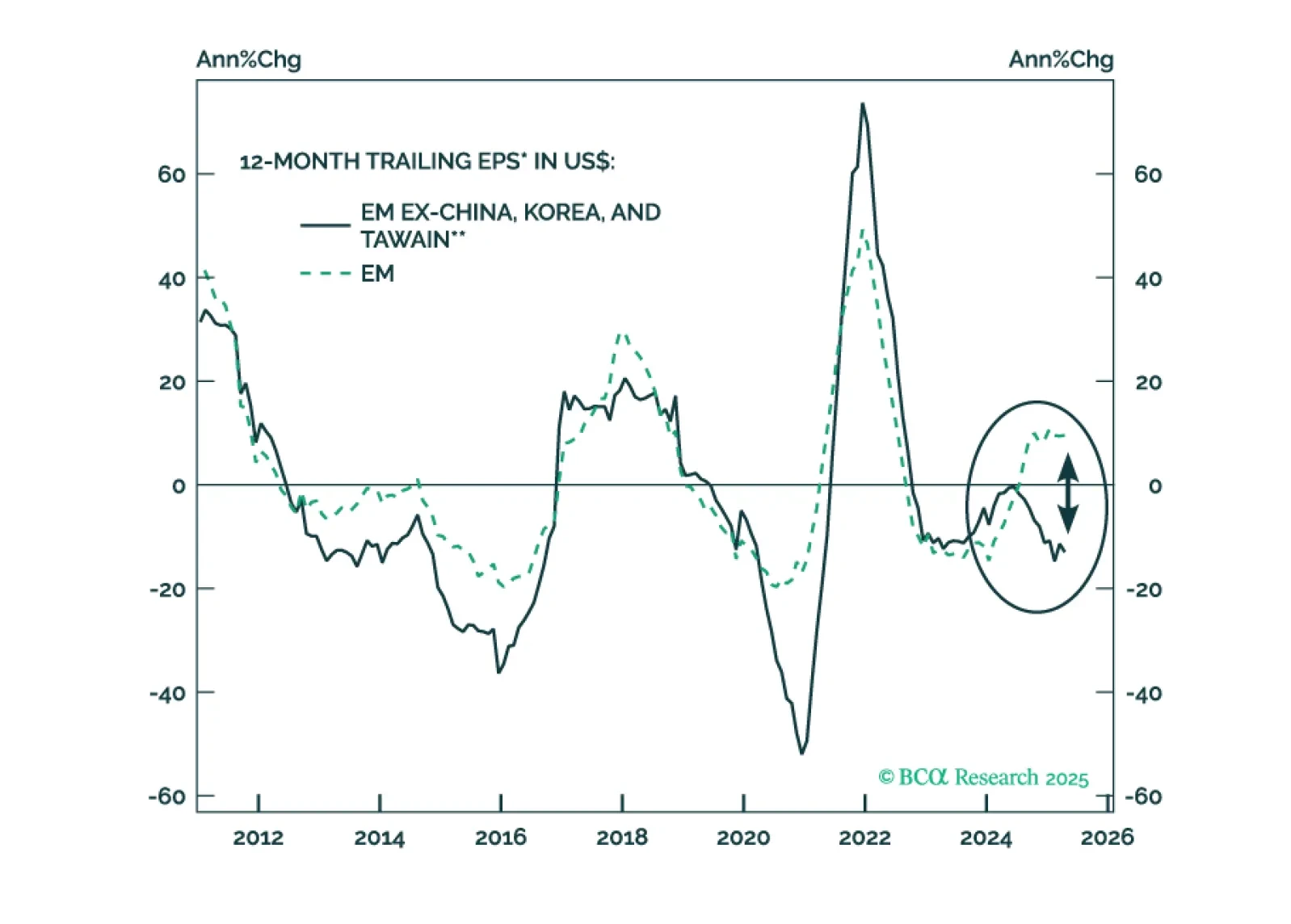
The EM EPS recovery has been narrow, solely driven by TMT stocks in China, Korea, and Taiwan. EM corporate profits are set to contract in the next six to nine months. Unlike in the past, US dollar weakness will be deflationary, not reflationary, for EM share prices.

Recently, small-cap stocks have shown signs of outperformance. In this report, we examine whether the rebound is sustainable by analyzing long-term structural trends, the macroeconomic backdrop, the impact of tariffs, and other key factors.

Following a rapid-fire review of issues related to household balance sheets, durable goods demand, the impact of tariffs, DOGE’s capacity to move the budget needle and the labor market’s ongoing cooling, we reiterate our defensive asset allocation recommendations.


It has been three days since Israel started its air campaign against Iran. We now have greater visibility into Israel’s targeting, as well as Iran’s retaliation. Israel’s air force has struck almost every single Iranian nuclear program facility, government buildings, research centers, and – most importantly – energy facilities. Most of these targets are expected, but the attacks against Iran’s energy facilities are concerning as they suggest that Tehran may have casus belli to strike back at the energy facilities strewn around the Persian Gulf.